
Especially in consumer electronics, growing demand for like-new performance at a lower price is transforming the industry.
Whether for personal or business use, refurbished phones and IT equipment are now a practical and credible alternative to buying new.
Recent market trends and statistics reflect the momentum the refurbished industry has built in recent years.
Refurbished Electronics Current Market Statistics
To understand the scale of the refurbished electronics market and where it is headed, it helps to look at the larger device ecosystem.
- There are currently 108 mobile phone subscriptions for every 100 people worldwide.
- 16% of adults in the United States identify as “smartphone-only” internet users, relying entirely on mobile devices rather than home broadband.
- Fortune 1000 organizations are expected to contribute over 5 million IT units per year to the refurbishment pipeline as they move through three-year technology refresh cycles
- Approximately 350M tonnes of e-waste are currently in landfills worldwide.
- E-waste generation is projected to reach 82M tonnes in 2030.
Among the millions of units entering the secondary market, understanding how to categorize each device is essential for maintaining seller credibility, customer satisfaction, and trust.
Here’s where refurbished grades A, B, and C come into play.
What Are Refurbished Grades?
Refurbished grades are a standardized set of quality categories that communicate the cosmetic and battery state of any refurbished device sold in secondary markets. Grades range from A to C, reflecting the results of a meticulous diagnostic and cleaning process designed to return a used asset as closely as possible to a “day one” state.
To receive any grade, refurbished phones and laptops or desktops must be 100% operational and have a battery life of at least 80% (some premium grade A refurbished phones may have 90% battery life) – that’s the typical benchmark among authorized refurbishers.
In essence, refurbished grades mostly help manage buyer expectations regarding external wear.
Refurbished Grades At A Glance
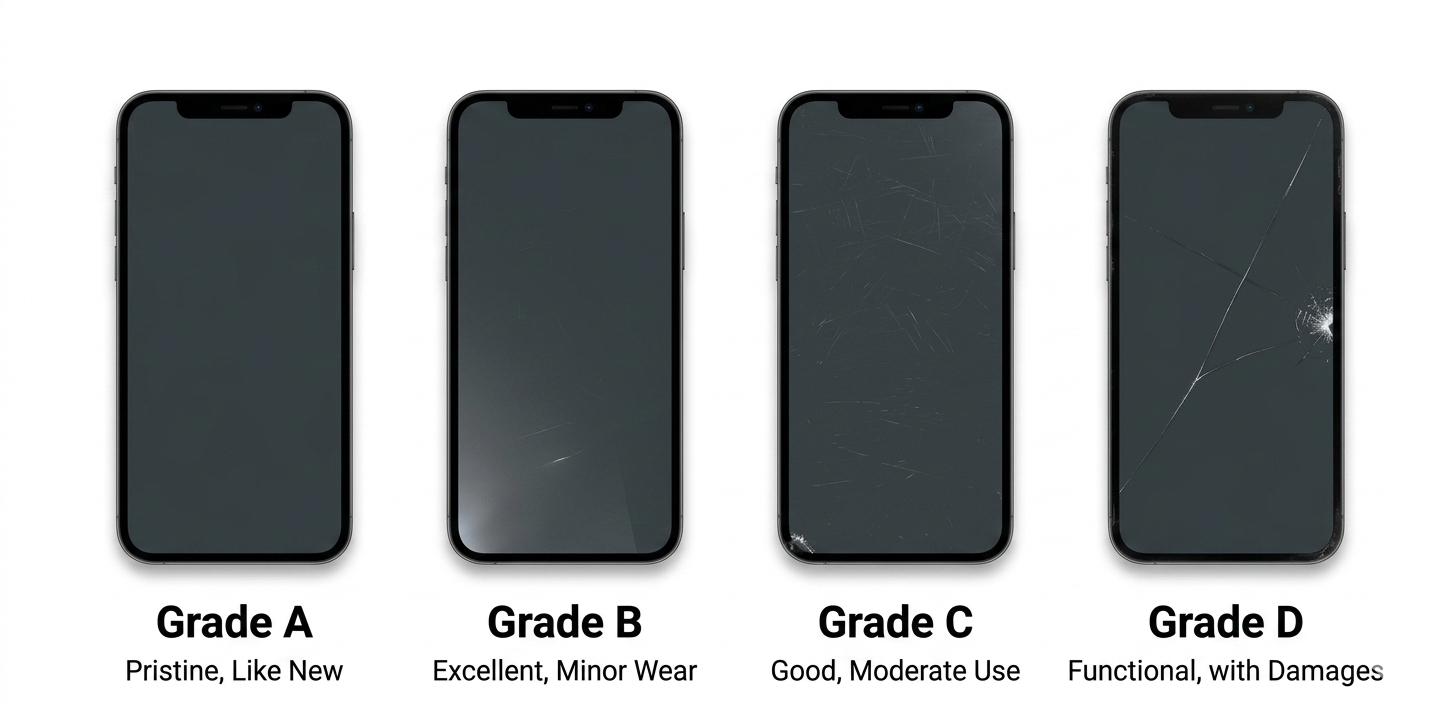
Most reputable sellers utilize a tiered letter system of A, B, and C to rank cosmetic quality. This framework provides a clear hierarchy:
- Grade A: The “near-mint” standard, showing almost no signs of previous ownership.
- Grade B: A “very good” condition where the device is fully functional but displays minor external scuffs.
- Grade C: A “good” or “fair” tier for functional units with clear, visible signs of heavy use.
What Exactly Is Grade A Refurbished?
A Grade A’ refurbished product is essentially indistinguishable from a brand-new unit at first glance. Such devices are characterized by blemish-free screens and casings or keyboards that lack any notable scratches or dents.
The definition of Grade A is largely the same across phones, laptops, notebooks, etc.: it represents the highest-quality tier of the refurbished market.
Grade A Refurbished: Phones vs. Laptops
While reputable refurbishment services apply the same high standards overall, the specific checks vary depending on the type of device being assessed.
Read on for a detailed breakdown of what each refurbished grade means for phones and laptops.
Grading Criteria For Grade A Smartphones
Screen: Zero scratches, white spots, dead pixels, discoloration, or other display defects.
Body/Casing: No visible scuffs, dents, cracks, frame damage, or heavy wear on the frame or back glass.
Battery Health: Usually guaranteed at 80% to 100% capacity.
Ports: Charging and audio ports are clean, tight, fully functional, and free of wiggle, debris, or signs of heavy wear.
Connectivity: Wi-Fi, Bluetooth, 5G or other cellular connectivity, and NFC come fully tested and operational.
Camera: Front and rear cameras are clear, fully functional, and free of scratches, dust, or defects that affect photo or video quality.
Audio: Speakers and microphones are clean and deliver clear sound with no crackling, distortion, or obstruction.
Sensors & Biometrics: Face ID, Touch ID, fingerprint readers, or proximity sensors work properly and without delay.
Security Status: The device has been factory reset, is not blacklisted, is not linked to a previous owner’s account, and is unlocked.
Software: The device is running a clean, authentic operating system with proper functionality across core features.
Grading Criteria For Grade A Laptops
Screen: No scratches, dead pixels, white spots, discoloration, or keyboard imprints on the display.
Body/Casing: No visible scuffs, dents, cracks, frame damage, or heavy wear on the outer shell.
Structural Integrity: No misalignment or structural warping; hinges and other structural components feel firm and stable.
Input Surfaces: No shine on keys or trackpads, and no signs of excessive wear on frequently used touchpoints.
Battery Health: Typically guaranteed to hold a charge for 2+ hours or maintain at least 80% battery health.
Ports: USB, HDMI, charging, audio, and other ports are clean, tight, fully functional, and free of debris or heavy wear.
Connectivity: Wi-Fi and Bluetooth are fully tested and operational.
Audio: Speakers and microphones are clean and deliver clear sound with no crackling, distortion, or obstruction.
Cooling System: Cooling should function properly, with quiet fan operation and no abnormal heat buildup.
Internal Integrity: There are no signs of liquid damage, internal faults, or performance throttling.
Webcam: The webcam is clear, fully functional, and free of defects that affect video quality.
Security Status: The device has been factory reset, is not linked to a previous owner’s account, and it’s ready for a new user.
Software: The device is running a clean, authentic operating system with the correct drivers installed.
Why The Grading Distinction Matters
Not all devices age the same way, which is why refurbished grade distinctions matter in real buying decisions.
Grade A Phones Are Harder To Find
Since phones are handled constantly and kept in pockets, Grade A is harder to find. This is what usually makes the price gap between Grade A and Grade B with minor scratches quite large.
Grade A Laptops Are More Common
Laptops often sit on desks, so Grade A units are more common.
Refurbished Grade A- (A Minus)
Despite its higher status, Grade A- might allow for a tiny scuff on the bottom cover of the laptop that isn’t visible during normal use.
Refurbished Grade A+
Some high-end refurbishers may use Grade A+ or “Premium” to indicate a device with zero signs of use, whereas a standard Grade A might have a minor blemish on the underside that is invisible during normal operation.
In addition to phones and laptops, other IT components, such as refurbished graphics cards and monitors, may also be graded A/B/C or categorized as Excellent, Very Good, or Good.
Quick Tip: Always check if the seller includes a warranty (typically 6–12 months or even 2 years). Even a Grade A device can have internal hardware issues that aren’t visible on the surface.
Remanufacturing: The Highest Grade Refurbishment
Remanufacturing is a higher standard of refurbishment intended to restore devices to at least their original performance levels or, in some cases, to benchmarks comparable to newer models.
Remanufactured electronics go through a more extensive restoration process. They are fully dismantled and reassembled, with any underperforming components typically replaced with OEM parts.
These Premium devices undergo deeper cleaning and testing, thorough cosmetic improvements, and stricter quality control before resale. They also come with a longer warranty.
The “Arm’s Length” Rule Of Refurbished Grading
Refurbished grades are often tested using the “Arm’s Length” rule. So, for example, if you hold the device at arm’s length (about 12-18 inches / ~30.5-46 cm) and cannot see a single scratch or imperfection, it qualifies as Grade A.
What Is Grade B Refurbished?
Refurbished Grade B describes a device that offers the perfect middle ground between aesthetics and value. While you might find light scratches on the frame or minor scuffing on the corners, the screen is usually free of marks, and the hardware performance is identical to a Grade A unit.
Grade B is often the preferred choice for businesses looking to outfit staff or students with everyday tech, where minor wear is expected over time.
Grading Criteria For Grade B Smartphones
Screen: May have light, superficial scratches or micro-scratches that are not noticeable during normal use; no dead pixels or major discoloration.
Body/Casing: Visible scuffs, light scratches, or minor wear on the frame or back; no cracks or major dents that affect structural integrity.
Battery Health: Often guaranteed at a minimum of 80% capacity, though exact thresholds may vary by refurbisher or marketplace.
Ports: Fully functional and clean, though there may be visible cosmetic wear around the charging port or other openings.
Connectivity: Wi-Fi, Bluetooth, cellular connectivity, and NFC are tested and well-functioning.
Camera: Cameras are fully functional and clear, with no defects that materially affect photo or video quality.
Audio: Speakers and microphones are fully functional, with clear sound and no hardware-related distortion.
Sensors & Biometrics: Face ID, Touch ID, fingerprint readers, and proximity sensors function properly.
Security Status: The device has been factory reset, it’s free from prior-owner account locks, and it’s not blacklisted; carrier unlock status may vary unless specifically stated by the seller.
Software: Running a clean, authentic operating system with core functions working properly.
Grading Criteria For Grade B (Refurbished) Laptops
Screen: May have light surface scratches or faint keyboard imprints that are not noticeable during normal use; no dead pixels or major white spots.
Body/Casing: Visible scratches, scuffs, discoloration, or minor blemishes on the lid, base, or corners are acceptable if they do not affect function.
Structural Integrity: Hinges and chassis are stable and fully functional, with no structural issues that affect normal use.
Input Surfaces: Moderate shine on commonly used keys or the trackpad may be acceptable, but keys should remain clearly legible and usable.
Battery Health: Holds a reliable charge and passes the standard battery check, though exact health thresholds vary by seller.
Ports: All ports are fully functional, even if they show visible signs of regular use.
Connectivity: Wi-Fi and Bluetooth are fully tested and operational.
Audio: Speakers and microphones deliver clear sound with no hardware-related crackling or obstruction.
Cooling System: Cooling functions properly and prevents overheating during normal use.
Internal Integrity: The device has passed standard hardware testing and shows no signs of faults that affect normal performance.
Webcam: Fully functional, with no defects that materially affect image quality.
Security Status: Factory reset, with no BIOS password or prior management lock that prevents normal setup and use.
Software: Clean, authentic OS installation with the necessary drivers properly installed.
The Key Difference Between Grade A & Grade B
Grade B devices are typically priced lower because they show more visible cosmetic wear than Grade A products, while still being intended to remain fully functional after inspection, testing, and refurbishment.
What Is Grade C Refurbished?
For refurbished electronics, Grade C is the most economical tier, representing functional hardware that carries a visible history. You should expect significant scratches, potential dents in the casing, or heavy wear on keyboards. Despite these aesthetic flaws, the device remains a reliable tool for those prioritizing utility and low price over appearance.
Grade C devices are often sold as Fair, Acceptable, or similar low-cosmetic condition options. Exact standards and battery health can vary by refurbisher, marketplace grading requirements, and device category.
Grading Criteria For Refurbished Grade C Phones
Screen: May show visible scratches or heavier surface wear, but should remain usable and free of cracks that impair normal operation.
Body/Casing: May have significant scuffs, deeper scratches, dents, discoloration, or other visible cosmetic wear on the frame or back.
Battery Health: Meets minimum functional threshold, commonly 80% on major refurbished marketplaces, though exact requirements may vary by seller.
Ports: Functional, though they may show visible cosmetic wear from prior use.
Connectivity: Wi-Fi, Bluetooth, cellular connectivity, and NFC function properly.
Camera: Performs as expected, with no defects that materially prevent normal photo or video use.
Audio: Speakers and microphones work properly (normal use), even if the device shows age-related cosmetic wear.
Sensors & Biometrics: Face ID, Touch ID, fingerprint readers, and proximity sensors function properly.
Security Status: Device is factory reset, free from prior-owner account locks, and not blacklisted.
Software: Runs a clean, authentic operating system with core functions working properly.
Grading Criteria For Refurbished Grade C Laptops
Screen: May show visible scratches, blemishes, or keyboard marks, but should remain functional and free of cracks that prevent normal use.
Body/Casing: May have heavy scratches, scuffs, dents, discoloration, or other visible cosmetic blemishes on the lid, base, or corners.
Structural Integrity: Hinges, lid, and chassis remain usable and safe for normal opening, closing, and operation.
Input Surfaces: Keys and trackpads may show noticeable shine or wear, but are functional and usable.
Battery Health: Holds a usable charge and passes basic battery checks, though exact health thresholds vary by seller and are not always standardized.
Ports: All ports work properly, even if they show clear signs of frequent use.
Connectivity: Wi-Fi and Bluetooth are functional and tested.
Audio: Speakers and microphones work as expected (normal use).
Cooling System: Cooling supports normal operation without causing device failure during intended use.
Internal Integrity: The device has passed standard hardware checks for core functionality and has no faults that prevent normal use.
Webcam: Webcam remains functional for normal video use, even if the device shows visible cosmetic aging elsewhere.
Security Status: Device is factory reset and free from BIOS passwords or prior management locks that block normal setup and use.
Software: A clean, authentic OS installation with the necessary drivers installed.
What About Other Grades, Such As Grade D?
Units classified as Grade D or below are generally considered “budget warriors” or even salvage assets. These devices may have compromised functionality, such as dead ports or significantly degraded batteries, and are often sold for parts or specialized repair projects. Consumer-facing merchants rarely offer these to the general public.
Refurbished iPhone Grades: What They Mean & How They Differ From Other Brands
Refurbished grades in iPhones generally follow the same cosmetic logic used for other smartphones (or any other refurbished product, in fact): Grade A looks best, while Grades B and C show more wear.
The main difference is that refurbished iPhones are often evaluated with extra attention to Apple-specific features and system checks.
However, cosmetic condition is only part of the story with iPhones. Here are a few more checks:
Apple-Specific Checklist For Refurbished iPhones
- Activation Lock / Find My status is a critical check, since Apple explicitly warns buyers not to purchase an iPhone if Activation Lock is still enabled, which usually means the device is still tied to the previous owner’s iCloud account.
- Parts and Service History is a core inspection point on supported models, where the device may show labels such as Genuine Apple Part or Unknown Part for certain repairs.
- Face ID and Touch ID should function properly – especially because biometric features are a core part of everyday iPhone use.
- Carrier lock status is worth checking separately, since an iPhone may be fully unlocked or still tied to a specific network provider.
- Unknown Part / Important Message warnings can appear after some repairs because of Apple’s parts-pairing system, making them a valid iPhone-specific consideration when evaluating a refurbished device.
Pro Tip: Apple’s refurbished iPhone program does not use letter grades such as A, B, or C. Instead, Apple offers refurbished iPhones under a single certified standard that includes a new battery, a new outer shell, full inspection, original accessories, and a 1-year warranty.
This makes them much closer to new devices, though usually with a smaller discount than marketplace-refurbished alternatives.
Refurbished Monitor Grading Standards: What Gets Checked
Refurbished monitor grading focuses on display-specific issues that matter in day-to-day viewing, not just general cosmetic condition.
The main checks usually include:
- Dead or stuck pixels
- Screen scratches
- Pressure marks
- Backlight bleed
- Brightness and color uniformity
- Wear on the stand, bezel, or screen surface that affects normal use
Sellers also commonly verify that key display inputs such as HDMI, DisplayPort, DVI, or VGA work properly and that the panel holds a stable image without flicker or distortion.
What Grades A, B & C Usually Mean For Refurbished Monitors
Grade A monitors usually have a clean screen with little to no visible scratching during normal use, strong image consistency, and no meaningful display defects.
Grade B monitors may show more noticeable cosmetic wear and can sometimes allow a limited number of dead pixels (usually fewer than 9) and light scratches or scuffs.
Grade C monitors typically show more obvious wear on the screen, bezel, or stand, and may have more visible blemishes, provided the monitor still remains usable for normal display purposes.
Refurbished Graphics Card Grade A, B, C: What Gets Checked
Refurbished graphics cards are evaluated mainly on stability under load, not just appearance.
The most important checks usually include:
- Passing a benchmark or stress test.
- Holding a stable image with no artifacting.
- Maintaining stable performance (no crashes or errors).
- Running with normal fan behavior and thermal performance.
Sellers also commonly inspect the PCIe connector, display outputs, PCB, and cooler assembly for physical wear or damage that could affect performance.
What Grades A, B & C Usually Mean For Refurbished Graphics Cards
When it comes to grading, the hands-on difference with refurbished graphics cards is less about surface cosmetics and more about confidence under stress.
A higher-grade card should feel cleaner, quieter, and more reliable in sustained workloads, while a lower-grade unit may still work but show heavier wear on the casing, bracket, or ports.
However, once a card starts showing artifacting, instability, or failed testing, it can no longer be treated as a refurbished product; it’s used for parts, sent to electronics recycling, or e-waste disposal.
In fact, most refurbished graphics cards on the market are either top-tier refurbished (Grade A cards) or simply marked as “Used” (where testing depends heavily on the seller).
How Refurbished Grades Differ Across Marketplaces
Grading is not universally regulated, and standards shift between platforms. Here’s an example:
Amazon Renewed Grading
The Amazon Renewed scheme uses four tiers – Premium, Excellent, Good, and Acceptable.
Premium is the highest cosmetic tier, with no screen scratches and at least 90% battery life, and it is backed by a 1-year Amazon Renewed Guarantee.
Lower grades, Excellent, Good, and Acceptable generally require at least 80% battery life with progressively more visible wear and usually come with a 90-day Amazon Renewed Guarantee.
Note that not every refurbished item on Amazon is sold under the Amazon Renewed program – unless clearly stated on the listing page.
eBay Refurbished Grading
The eBay Refurbished program uses the Certified Refurbished, Excellent, Very Good, and Good categories.
Certified Refurbished is the top tier and is restored by the manufacturer or a manufacturer-approved vendor, typically with original or new accessories and a 2-year warranty.
The lower tiers are still functional and sold by qualified sellers, usually with a 1-year warranty.
Not every refurbished listing on eBay is part of the official eBay Refurbished program, unless stated as such.
Green Wave Electronics Remanufactured & Refurbished Grading
Green Wave Electronics offers high-end remanufactured devices, along with standard refurbished IT that follow the standard grading logic – from Excellent to Very Good to Used. New and Open Box electronics are also available at the Green Wave Electronics Store.
Remanufactured electronics undergo full disassembly, detailed inspection, component-level repair, rigorous testing, and OEM replacement of core parts where needed. Plus, they can have a warranty of up to 3 years.
Refurbishment Testing Levels: What Happens Before a Grade Is Assigned
A cosmetic grade tells a buyer how a device looks. On its own, it does not tell you how deeply that device was tested. Behind every grade sits a testing level that determines how much diagnostic work a unit goes through before it is cleared for resale.
At Green Wave Electronics, returned electronics are routed through two broad testing levels:
Level 0 covers unused or open-box units that can be inspected, reset, and re-boxed without full functional testing – typically items returned in like-new condition with no sign of use.
Level 1 is a complete functional test of the device, applied when a unit has been used in the field, when its history is unknown, or when a program requires every unit to be verified regardless of condition.
The same Grade A label can sit on top of either level, which is why a rigorous testing and inspection process – not just the cosmetic grade – is what actually protects resale value and keeps return rates down.
Building A Profit-First Refurbishment Strategy
Returned devices do not have to sit idle or turn into write-offs. With Green Wave Electronics, you can turn reverse logistics into a structured recovery engine.
From intake and inspection to testing, repair, refurbishment, and redistribution, every unit is routed toward its highest-value outcome.
Whether you are managing field service returns, excess inventory, or large-scale RMAs, our programs help you recover more value, reduce waste, and keep products moving back into resale, redeployment, or certified recycling streams.
Don’t just process returns. Turn them into refurbished inventory. See how Green Wave Electronics can help you recover more from every return. Contact us today.
FAQs
Is Refurbished Grade A Good?
Absolutely, as it offers the best possible experience for buyers who want the “new” feeling without the retail price tag. Grade A units typically come with the most robust warranties and the highest battery health scores, often reaching 80% or greater.
Why Do Refurbished Grades Matter To Buyers?
Refurbished grades provide the transparency necessary for a buyer to choose a device that fits their specific risk tolerance and budget. By clearly labeling cosmetic wear, buyers know what they are getting, sellers reduce the rate of “item not as described” returns, and the industry builds a more sustainable, circular economy.
What Is The Difference Between Renewed Grade A & Grade B?
In Amazon Renewed, Grade A renewed units appear virtually new with no visible scratches from a short distance, while Grade B units show minor wear, like light scuffs, but remain 100% functional.
How Good Is Grade A Refurbished?
In consumer electronics, Grade A indicates top-quality products available in the secondary market, often offering an experience that is functionally and cosmetically identical to that of a new product.
What’s The Difference Between A Refurbished Grade And A Testing Level?
A grade describes a device’s cosmetic condition (Grade A, B, or C), while a testing level describes how thoroughly it was checked before resale. A unit can look flawless (Grade A) but still require full functional testing (Level 1) if it has been used in the field, which is why reputable refurbishers track both.