Case Study: Green Wave Electronics Enabled a Fast Retail Rollout
Case StudyGreen Wave Electronics Enabled a Fast Retail RolloutA major clothing retailer needed to upgrade inventory control and loss-prevention across…

A name brand big box retailer upgraded video surveillance across hundreds of locations while keeping legacy equipment running during a multi-year transition.
Green Wave Electronics received uninstalled equipment from upgraded stores, triaged serviceable vs. unserviceable units, refurbished what could be recovered, and shipped replacements fast to locations still running legacy systems.
During a large-scale surveillance refresh, the retailer needed a reliable way to manage uninstalled legacy equipment, recover as many serviceable units as possible, and keep replacement parts flowing to stores that had not yet been upgraded.
A major big box retailer needed to transition their video surveillance systems to the newest generation product while maintaining a dependable supply of legacy parts to service stores that had not yet been upgraded. With the legacy line long out of production and replacement parts scarce, the program needed to recover every possible unit, eliminate disposal risk, and keep critical equipment available throughout the two-year rollout.
Accurately separate recoverable units from non-serviceable equipment immediately upon receipt, with full cataloging by store location.
Disassemble, inspect, clean, test, repair, retest, refurbish, and repackage serviceable units for fast redeployment across the remaining legacy stores.
Ensure unserviceable equipment is managed responsibly through R2 recycling to avoid EPA violations and reputational risk.
The retailer was beginning a major transition of video surveillance equipment across thousands of big box stores in North America. The legacy equipment was long out of production, replacement parts were mostly unavailable, and the full rollout was expected to take two years. During the transition, stores still using the legacy platform would continue to experience failures, but there was no reliable stock of service parts to keep systems operational.
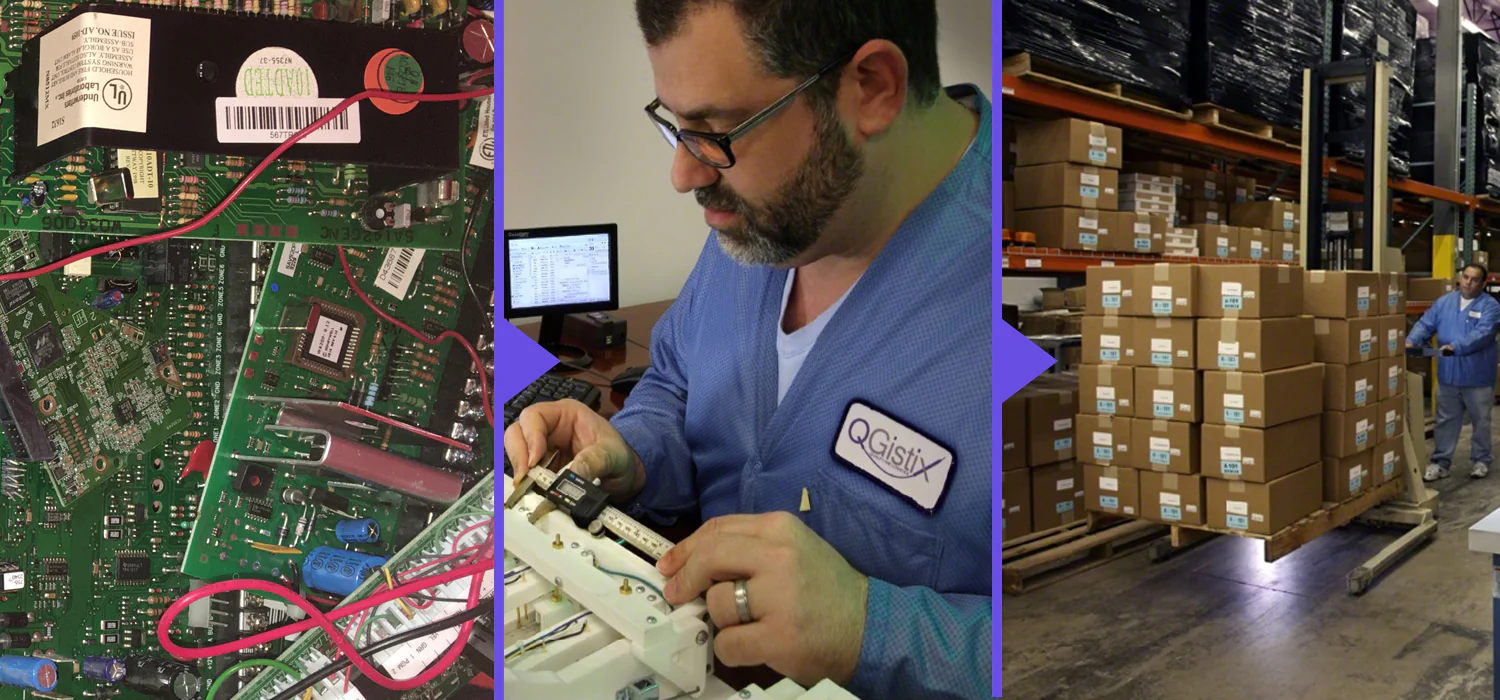
Green Wave Electronics proposed three programs seamlessly integrated to meet the retailer’s needs: a Reverse Logistics program to receive uninstalled parts, a Test, Repair and Refurbishment program to recover serviceable units, and a Distribution program to rapidly ship refurbished parts to stores still operating legacy systems.
Each upgraded store received a detailed SOP for uninstall and packaging to prevent collateral damage during transit. Uninstalled equipment was palletized and shipped to Green Wave Electronics for secure receiving and processing.
Every unit was cataloged by store number and triaged. Serviceable units moved to test and repair, while unserviceable units were sent for R2 recycling, eliminating disposal risk and ensuring responsible processing.
The retailer established a consistent collection process for every upgraded store. By returning 100% of uninstalled equipment to Green Wave Electronics, all legacy units were cataloged, triaged, and dispositioned correctly, eliminating the economic and reputational risk of improper eWaste disposal.
Stores still running the legacy platform could order refurbished parts directly from their locations. Orders placed by 2pm ET shipped same day, with overnight options available for critical items, minimizing downtime for cameras, PTZ controllers, and DVRs supporting loss prevention.
With refurbished legacy inventory available, stores experiencing failures could return to full capability quickly. Without this recovered supply, the retailer would have faced time-consuming retrofits, sourcing delays, and compatibility workarounds that slow restoration and increase costs.