As the digital world expands, so does its demand for electricity, water, materials, and responsible disposal. Green computing offers a practical framework for reducing the environmental impact of IT across design, manufacturing, daily use, and end-of-life recovery.
What Is Green Computing?
Green computing is the environmentally responsible design, make, use, and disposal of IT hardware, digital infrastructure, and related technologies in ways that reduce energy use, carbon emissions, and electronic waste.
Also known as green IT or sustainable computing, the concept applies across the digital technology lifecycle, from chip makers and hardware manufacturers to businesses and everyday users.
How Green Computing Helps Save the Environment
Green computing helps reduce the environmental cost of modern technology in many ways:
Cutting Energy Waste Across the IT Lifecycle
The Information and Communications Technology (ICT) sector accounts for an estimated 1.8% to 3.9% of global greenhouse gas emissions across its manufacturing, operational, and wider lifecycles.
To address this footprint, green computing offers sustainable ways to reduce such environmental impacts and help mitigate climate change.
Reducing Data Center Water Consumption
Beyond electricity, water consumption has emerged as another critical pressure point. Just consider data centers, the backbone of the digital world, that often require huge volumes of water for cooling.
According to the Environmental and Energy Study Institute (EESI), a medium-sized data center facility can consume up to 110 million gallons of water annually.
Similarly, a larger data center may use around 300,000 gallons/day, while massive facilities can reach up to 5 million gallons of water use per day – a volume comparable to the needs of a town with 50,000 residents.
What Are the Elements of Green Computing?
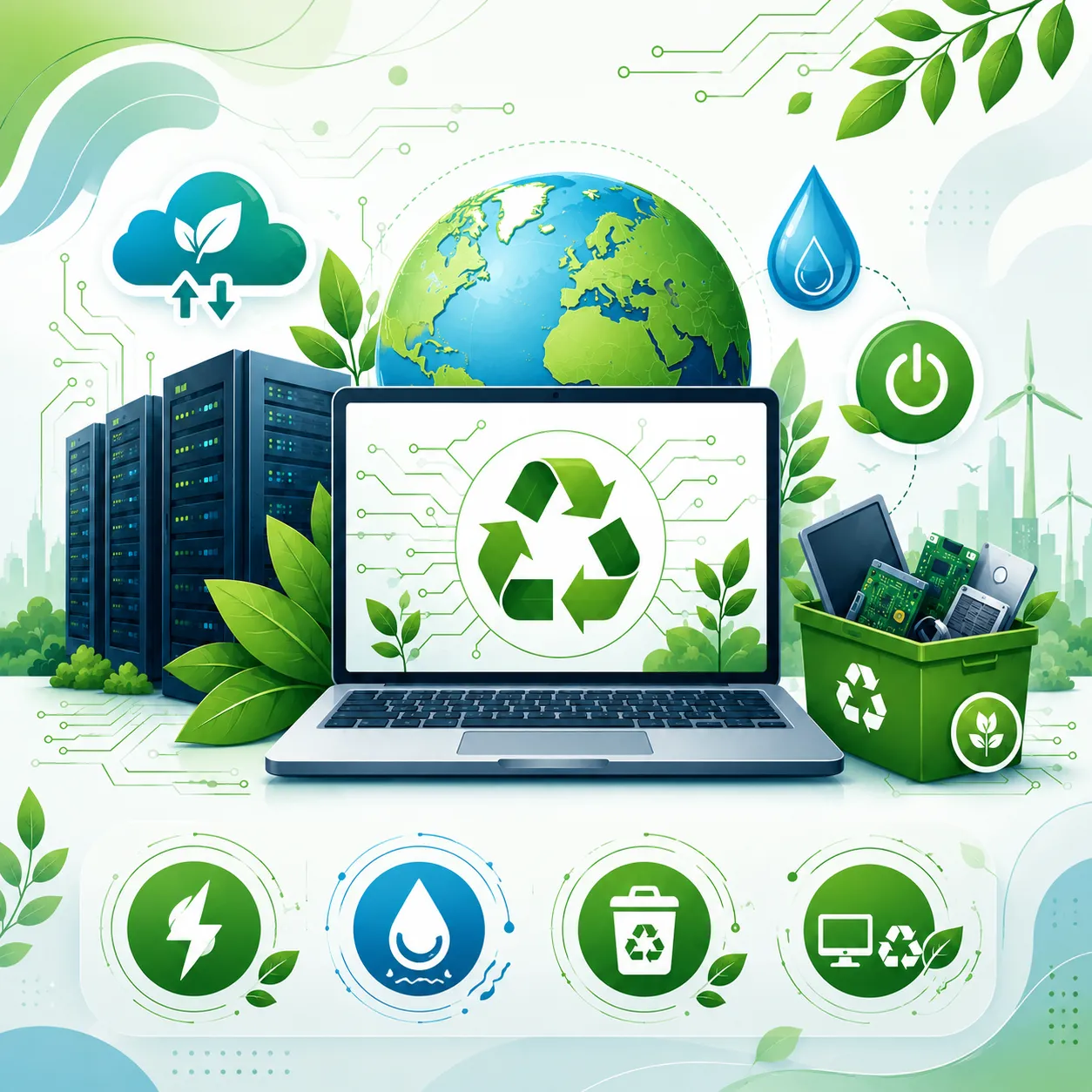
Effective green information technology is built upon four primary pillars that address different stages of a product’s life:
-
Green Design
Creating energy-efficient computers, servers, and cooling systems that require less power to operate.
-
Green Manufacturing
Reducing waste and eliminating hazardous substances during the production of electronic components.
-
Green Use
Implementing power-saving settings and eco-friendly habits to minimize daily electricity consumption.
-
Green Disposal
Ensuring that unwanted equipment is refurbished, reused, or recycled through certified facilities to prevent environmental contamination.
Green Computing Best Practices
Green computing best practices focus on reducing technology’s environmental impact. Key steps include using energy-efficient hardware, enabling sleep modes, and recycling e-waste responsibly. Efficient cloud use and digital document management also minimize carbon footprints.
What Manufacturers Can Do to Support Sustainable Computing
Sustainability begins long before a product reaches a consumer. Key manufacturing practices include:
Improving Performance per Watt
Manufacturers have developed hardware that delivers more computing power with less energy.
Energy-Efficient Chip Architecture
Advanced process-node chips, vertically stacked chip architectures, and other efficiency-focused designs improve performance per watt, as devices complete more useful work while consuming less electricity.
Workload-Specific Processing
Energy-heavy processing can be reduced by assigning tasks to the hardware best suited for them. Heterogeneous computing, for example, uses different processors for different workloads so each task runs more efficiently.
So, instead of relying on a single processor, systems assign general tasks to CPUs, AI and graphics to GPUs, and networking, storage, and security tasks to DPUs, so that each component operates at peak efficiency.
Sustainable Material Selection
Product and hardware designers prioritize recycled, renewable, and lower-impact materials while eliminating the use of hazardous substances.
This helps lower environmental risk at the end of a product’s life and makes devices easier to recycle or recover responsibly.
Eco-Friendly Manufacturing Processes
Green manufacturing aims to minimize waste during the production stage.
Leading manufacturers are already setting goals for net-positive water use, 100% renewable electricity, and zero waste to landfill across their factory operations.
Designing for Longevity and Reusability
To reduce the need for raw materials, manufacturers aim to lengthen the lifespan of devices and components so they do not require frequent replacement. They also try to design products that are easier to refurbish, repair, or upgrade.
Advancing Cooling Technologies
Incorporating more sustainable cooling systems, such as liquid cooling or optimized airflow designs, reduces the energy demands typically required for thermal management in data centers.
Meeting Energy Efficiency Benchmarks
OEMs engineer products to meet or exceed recognized standards, including:
ENERGY STAR®
A government-backed certification label verifying that devices meet strict energy-efficiency specifications.
EPEAT® Registry Requirements
A global ecolabel assessing electronics across comprehensive lifecycle criteria, including climate impact, circularity, chemicals of concern, and responsible supply chains.
These benchmarks help buyers compare products and choose more efficient, lower-impact technology.
How Organizations Can Apply Green Information Technology
Organizations can implement green information technology through a combination of infrastructure upgrades, software optimization, and strategic operational changes.
Implement Advanced Cooling
For data centers and server rooms, sustainable cooling methods such as liquid cooling or hot aisle/cold aisle containment can reduce the energy required for thermal management.
Transition to Renewable Energy
Powering IT infrastructure with renewable sources like solar or wind energy can significantly reduce technology-related carbon emissions.
Optimize Hardware Utilization
Using virtualization and containerization helps organizations run more workloads on fewer physical machines.
Virtualization
Splits a single physical server into multiple independent virtual machines. Each virtual machine operates like a distinct computer, running its own complete operating system.
Containerization
A lighter approach that packages applications to share one underlying operating system, reducing overhead so they launch faster and use less memory.
Such methods reduce the total amount of hardware needed and lower energy waste.
Improve Resource Management
Automated tools can be used to continuously analyze application resource needs, ensuring they only consume what is necessary to perform. This reduces waste in both private infrastructure and public cloud environments.
Extend Hardware Lifecycles
Rather than relying on frequent upgrades, organizations can maintain, repair, refurbish, and redeploy existing equipment to reduce demand for new raw materials and minimize e-waste.
Implement Proper E-Waste Disposal
When devices reach the end of their useful life, they should be recycled through certified ITAD programs or routed into verified reuse, resale, or donation channels.
Foster a Sustainable Culture
Success often requires internal organizational change, such as adopting ESG frameworks, setting measurable sustainability goals, and training staff on everyday green computing habits.
What Individuals Can Do to Reduce Their Digital Footprint
You can support green computing in everyday life by using devices more efficiently, reducing energy waste, managing digital storage responsibly, and keeping technology in use for longer.
Reduce Everyday Energy Waste
Turn off computers, monitors, printers, and other peripherals when they are not in use. Enable sleep or hibernate settings, lower screen brightness, and unplug devices during long periods of inactivity to reduce unnecessary power consumption.
Use Devices for Longer
Before replacing a device, consider repairing it or upgrading parts. In addition, opting for refurbished phones, laptops, and other pre-owned electronics reduces demand for new materials and helps prevent unnecessary e-waste.
Choose Energy-Efficient Technology
When purchasing new equipment, look for energy-efficient options, such as ENERGY STAR-certified devices. Choosing the right-sized device for your needs can also reduce energy use, as smaller or more efficient devices often consume less power than high-performance systems.
Manage Digital Storage Responsibly
Delete unnecessary files, duplicate media, unused apps, and old cloud backups. Smaller digital footprints reduce storage demand and can help lower the energy required to manage data across devices and cloud systems.
Reduce Unnecessary Streaming and Background Activity
Close unused apps, browser tabs, and background programs when they are not needed. Streaming, syncing, and running unnecessary processes can increase device energy use and add avoidable demand to networks and data centers.
Green Computing Examples
In practice, green computing often combines smarter software, more efficient infrastructure, and better product lifecycle management.
AI-Controlled Cooling Cuts Data Center Energy Waste
Google used DeepMind machine learning to optimize cooling inside its data centers. The system predicted temperature and pressure conditions and recommended cooling adjustments, reducing the energy used for cooling by up to 40% and cutting overall PUE overhead by 15%.
Designing Devices for Reuse, Recovery, and Lower-Impact Materials
Apple applies green computing principles across product design, materials, use, and recovery.
As the company has announced, more product components now use recycled materials, including 100% recycled cobalt in batteries, while its Daisy robot can disassemble 36 different iPhone models into separate parts for material recovery.
Building a Circular Economy
Green Wave Electronics helps you turn returned, excess, and retired electronics into sustainable, circular recovery opportunities.
We manage the full electronics lifecycle, recovering value from devices that might otherwise become waste. By pairing certified refurbishment with auditable recycling, the circular economy stops being a far-off ambition and becomes your standard lifecycle recovery workflow.
Ready to partner with an electronics-focused 3PL? Talk to our team.