
Buying a brand-new graphics card is not always the smartest path to better performance.
For many, refurbished GPUs offer a practical middle ground: lower cost than new hardware, more confidence than a standard used graphics card, and enough performance for gaming, design work, and everyday visual workloads.
Fast Facts
- Refurbished GPUs can deliver near-identical performance to new cards of the same model.
- Heat-related issues are the main risk, especially if cooling parts have not been properly cleaned or replaced.
- Most refurbished graphics cards come from returns, excess inventory, and enterprise hardware refreshes.
- Refurbished cards are safer than used GPUs offered for sale because they typically include testing, grading, and warranty coverage.
- Different resale channels, including Amazon Renewed, eBay Refurbished, and direct refurbisher storefronts, give buyers different trade-offs in price and warranty protection.
What Is a Refurbished GPU?
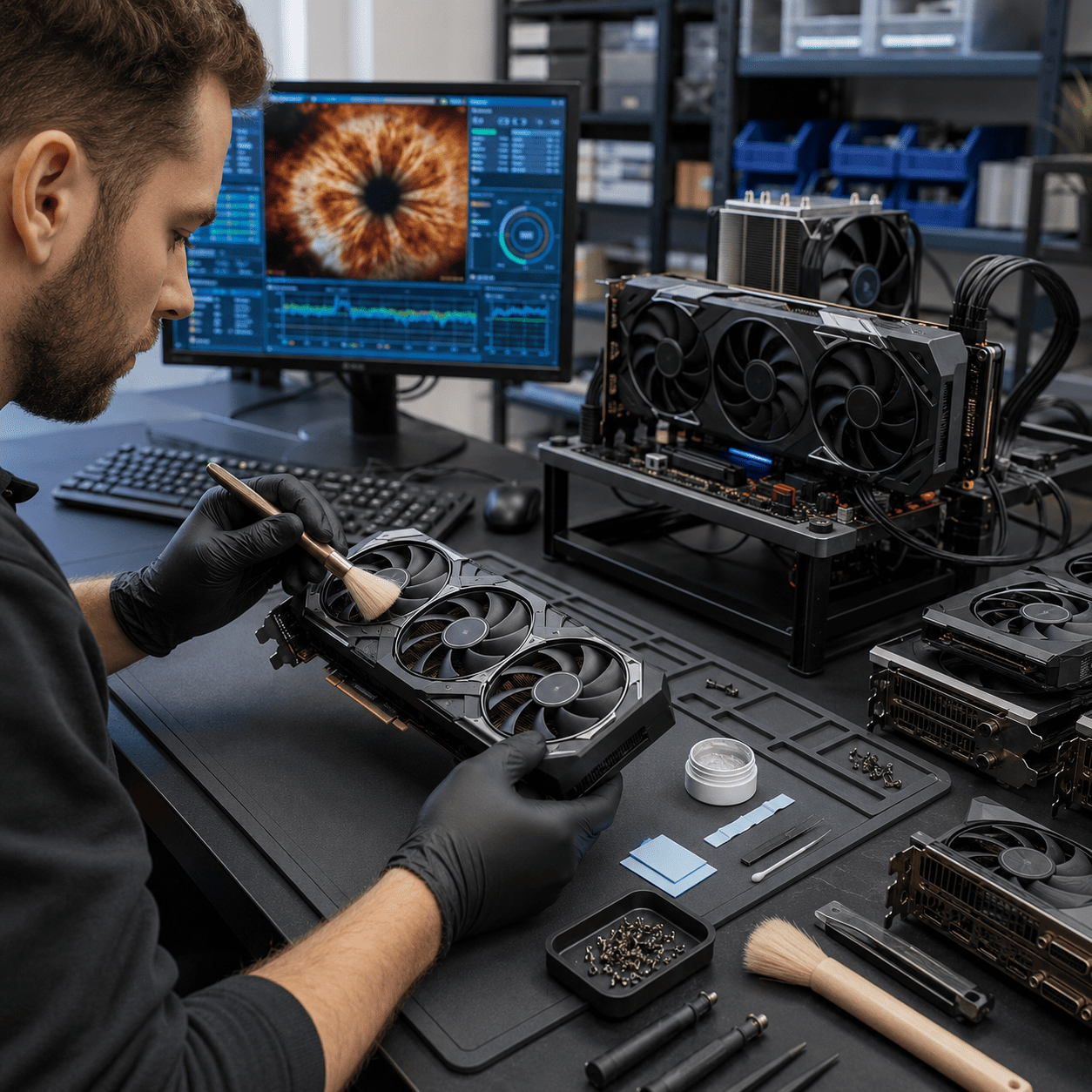
A refurbished GPU is a graphics component that has been previously owned and then inspected, tested, cleaned, repaired where needed, and prepared for resale.
Refurbished graphics cards are more trustworthy than standard used graphics cards, which are often sold “as-is” by private sellers without formal verification of their functional health.
Are Refurbished Graphics Cards Good?
From a performance standpoint, refurbished graphics cards are generally a good option. The main reason is that graphics chips themselves do not lose processing power. They generally either function at peak capacity or fail entirely.
That’s why a refurbished GPU can deliver a near-identical frame rate as a brand-new version of the same model.
Some independent testing of refurbished RTX 3060 Ti units showed, for example, an average frame-time variance of 1.3% or less compared with new units in 1440p gaming workloads, even under high-temperature testing conditions.
The Real Risk Is Poor Cooling
Excessive heat, and thermal management in general, is the primary risk factor for a second-hand GPU. What happens is that, over time, thermal paste dries out and thermal pads degrade, often leading to thermal throttling where the card slows itself down to prevent heat damage.
Such thermal slowdown often looks like a loss of performance, so many mistake it for chip degradation, while, in reality, it is poor cooling.
More than that, external conditions, like normal household dust, can also accumulate on the GPU fan month after month, causing additional heat and noise issues as the fan works harder to combat rising temperatures.
Where Do Refurbished GPUs Come From?
The refurbishment supply chain for second-hand GPUs is closely tied to retail return programs.
Retail Returns
Major retailers generate significant volumes of GPU returns – some defective, many simply unwanted. These cards then flow back through the supply chain as RMAs (Return Merchandise Authorizations).
GPU Warranty Replacements
When a manufacturer sends a customer a replacement card, the original unit often re-enters the return or RMA process instead of being discarded. From there, it goes through inspection and testing to prepare for resale.
Excess or Overstock Inventory
These are graphics cards that were never used but can no longer be sold as new because packaging may have been opened or damaged, the product line has been superseded by a newer model, or the retailer is liquidating discontinued stock.
Enterprise and Data Center Pull-Outs
Used GPUs retired from workstations, rendering farms (i.e., multi-machine clusters that run large 3D rendering jobs), or corporate IT refresh cycles are typically collected through ITAD (IT Asset Disposition) programs, lease returns, or buyback arrangements before being graded and remarketed.
Feeding the Refurbished Graphics Card Market
Many pre-owned GPUs move through the main resale channels: Amazon Renewed, eBay Certified Refurbished listings, and direct storefronts operated by the refurbishers themselves, like the Green Wave Electronics store.
Each remarketing channel serves a different buyer profile:
Amazon Renewed, for example, typically attracts buyers who prioritize program-level confidence, clear product standards, and a consistent buying experience regardless of who the seller is.
eBay Refurbished often appeals to buyers who want to compare listings more closely, weighing price, condition tier, warranty coverage, and seller reputation before choosing the best overall value.
Direct refurbisher channels can offer more competitive pricing, clearer product-level information (testing history, component replacements), and more direct support.
Additionally, for B2B clients, direct purchasing offers more room to negotiate custom terms, including bulk-purchase agreements, account-specific support, advance replacement programs, and custom warranty coverage.
Should You Buy a Used Graphics Card?
When deciding whether to buy a used GPU, the choice comes down to a simple reality: new GPU prices have remained stubbornly high, so buying a second-hand unit can be a strong budget option without necessarily sacrificing reliability.
Keep in mind that mid-range graphics cards typically deliver several years of practical use before a meaningful upgrade becomes necessary.
So, what you need to evaluate is not just the hardware itself; it is who is selling it, how it was tested and (eventually) repaired, and what protection comes with the purchase.
A graphics card sourced through a certified program with documented testing and a clear return policy is a much more trustworthy option than the same model listed without any of that backing.
The card may be identical. The confidence you can buy it with is not.
How to Know If a GPU Is Refurbished
When looking for a refurbished GPU for sale through a platform like Amazon Renewed or eBay Certified Refurbished, the signals to look for are the condition grade, warranty duration, return window, and seller rating.
Specialist direct storefronts usually go into more testing and repair description depth than standardized marketplace listings.
They will, for example, name their testing tools – 3DMark, a benchmarking tool that measures real-world graphics performance, and OCCT, a stress-testing tool that pushes the card to its limits to check for overheating and instability.
They may also specify whether thermal paste and cooling components are serviced as part of their process, and back the card with clearly stated warranty terms.
Used GPU vs Refurbished GPU: What’s the Difference?
While the terms are often used interchangeably, the practical difference is simple: a used GPU is usually resold as-is, while a refurbished GPU has been checked, cleaned, repaired if needed, and prepared for resale.
Used Graphics Card – Definition
A used graphics card is a previously owned card typically sold by an individual seller or general marketplace seller. In many cases, the listing only confirms that the GPU powers on or was working when removed.
That does not automatically make it a bad purchase, but it does mean the buyer carries more of the risk.
Refurbished Graphics Card – Definition
A refurbished graphics card is a pre-owned card that has gone through a more structured process before resale. That usually includes inspection, cleaning, functional testing, and, when needed, repair or replacement of worn components.
The key difference is accountability. A refurbished GPU is usually sold with clearer condition information, warranty coverage, and a defined return path if something goes wrong.
Is a Refurbished GPU Worth It?
A refurbished GPU can be a cost-effective alternative to new hardware when the seller can clearly answer three questions: what was tested, what was replaced, and what protection you have if something fails after purchase.
The answers are what separate a properly recertified card from a used listing with a polished description.
The Green Wave Electronics store carries meticulously refurbished GPUs with verified testing and flexible warranty coverage options of up to 3 years – so you can buy your preferred model with clarity, not just hope.